Archival Details
Collection: Chola Bronzes
Period: 16th – 18th c. CE
Historical Significance
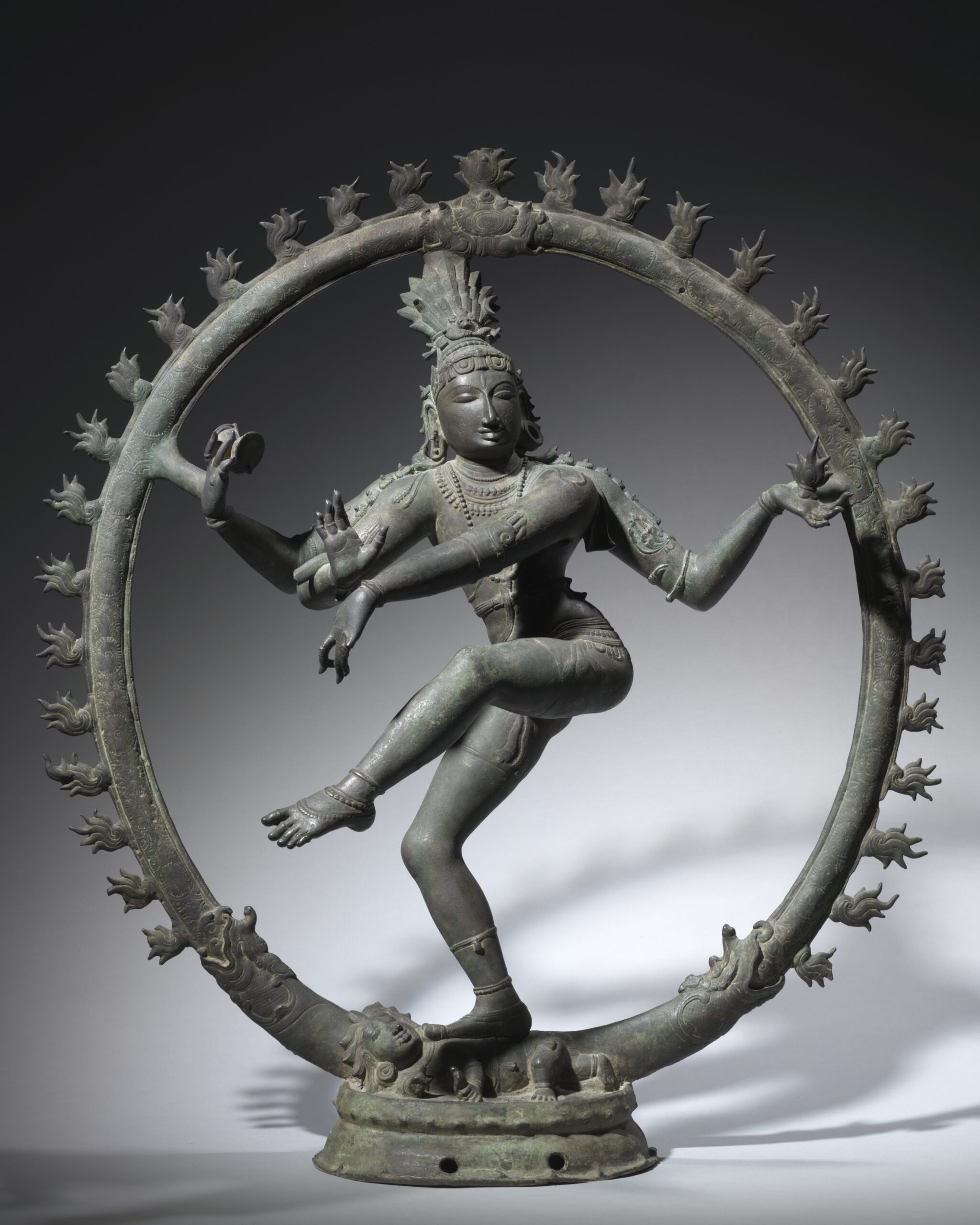
This exquisite bronze sculpture depicts Lord Nataraja, Shiva in his iconic form as the ‘Lord of the Dance,’ performing the Ananda Tandava, the dance of cosmic bliss. Originating from the 16th to 18th century CE, this piece reflects the enduring legacy of Chola bronze casting traditions, a period renowned for its exceptional metallurgical and artistic prowess. The Ananda Tandava symbolizes the cosmic cycles of creation and destruction, life and death, and the liberation of the soul, with each element of the sculpture carrying profound philosophical meaning. Shiva’s four arms represent his omnipresence and omnipotence: the upper right hand holds the *damaru* (drum), symbolizing creation; the upper left hand bears *agni* (fire), representing destruction and transformation; the lower right hand is in *abhaya mudra*, offering protection; and the lower left hand points to his raised left foot, signifying *moksha* or liberation. His right foot crushes the demon *Apasmara* (ignorance), illustrating the triumph of divine knowledge over darkness. The raised left leg, bent in a dynamic dance pose (*bhujangatrasita karana*), represents emancipation. The *jatamukuta* (crown of matted hair) often features a crescent moon and the goddess Ganga, highlighting his ascetic and divine nature. The halo of flames (*prabha mandala*) that encircles him symbolizes the continuous cosmic process. The dynamic movement, intricate details, and balanced composition exemplify the mastery of the artisans who created these devotional masterpieces, serving as both objects of worship and stunning works of art.
