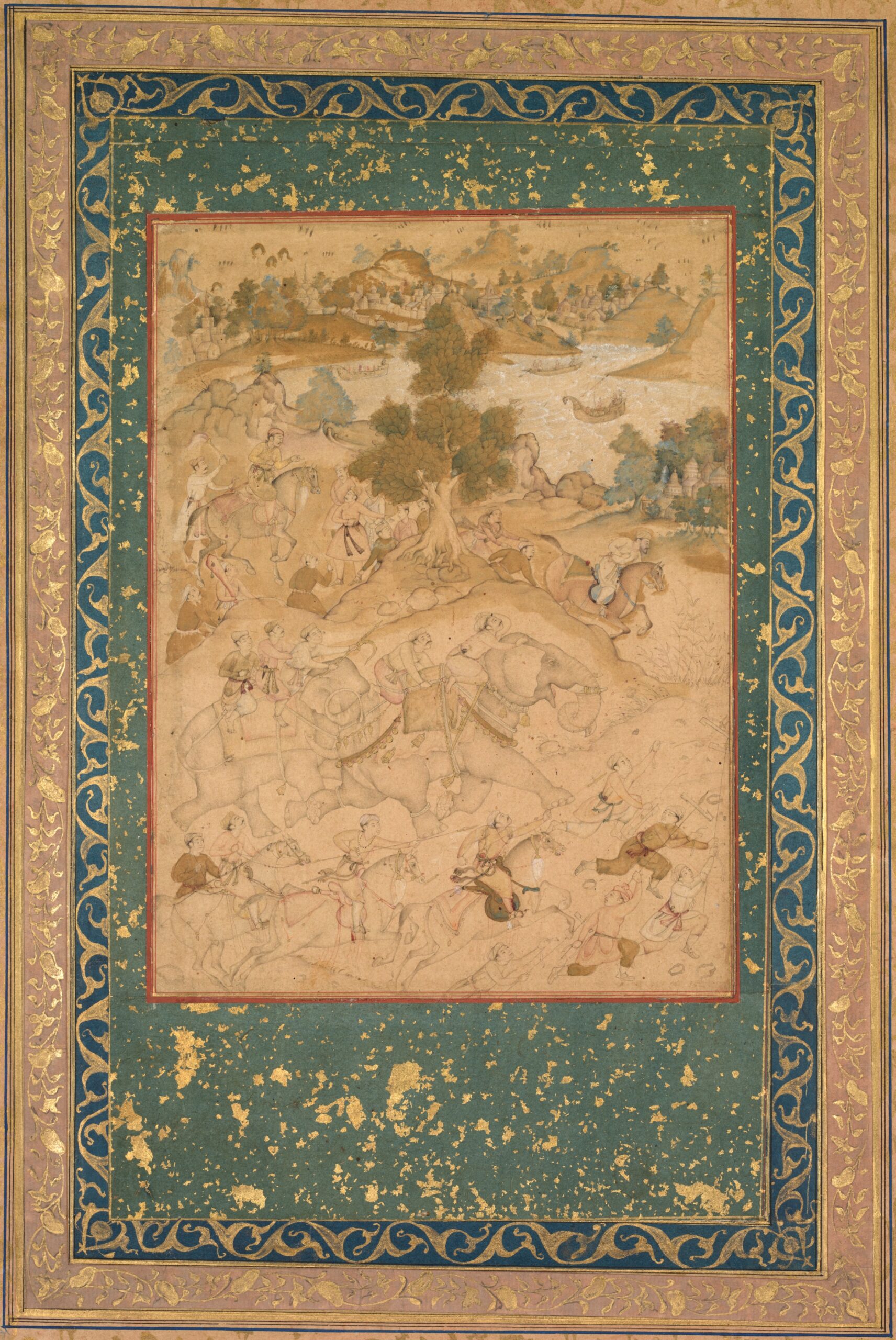
Archival Details
- Tradition: Mughal
- Period: c. 1602–3; borders added c. 1700s
- Medium: ink with use of colors and gold on paper, mounted on an album page with borders of gold-decorated buff and blue paper (recto); calligraphy by Faqir Ali (verso)
- Dimensions: Page: 37.5 x 25.4 cm (14 3/4 x 10 in.)
- Credit line: Gift in honor of Madeline Neves Clapp; Gift of Mrs. Henry White Cannon by exchange; Bequest of Louise T. Cooper; Leonard C. Hanna Jr. Fund; From the Catherine and Ralph Benkaim Collection
- Source: The Cleveland Museum of Art, accession 2013.309
Mughal painting developed in the imperial ateliers of the Mughal court from the 16th through 18th centuries, combining Persian manuscript traditions with Indian and European influences. Typically rendered in opaque watercolor on paper, it is known for detailed portraiture, historical chronicles, and naturalistic studies of flora and fauna.