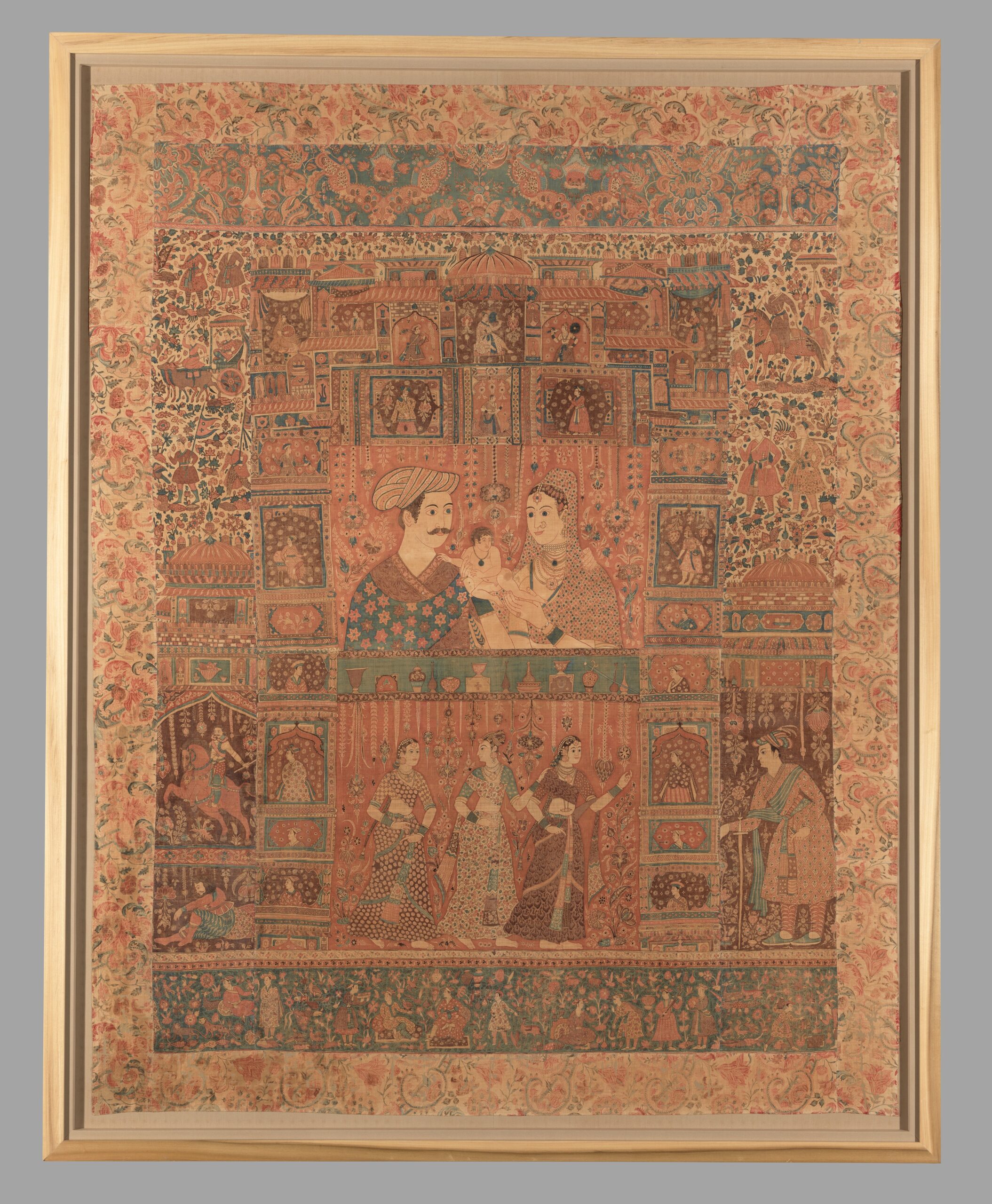
Archival Details
- Tradition: Kalamkari
- Period: ca. 1640–50
- Medium: Cotton; plain weave, mordant-painted and dyed, resist-dyed
- Dimensions: Textile: L. 100 in. (254 cm)
W. 78 in. (198.1 cm)
Mount:
L. 107 1/8 in. (272.1 cm)
W. 85 in. (215.9 cm)
D. 2 1/2 inches (6.4 kg)
Weight: 208 lbs (94.3 kg) - Credit line: Gift of Mrs. Albert Blum, 1920
- Source: The Metropolitan Museum of Art, accession 20.79
Kalamkari is a hand-painted and block-printed cotton textile tradition from the Coromandel Coast of South India, using natural dyes applied with a pen (kalam) and mordant techniques. Surviving works range from temple hangings to export chintz, and the tradition is known for intricate narrative and floral motifs.