
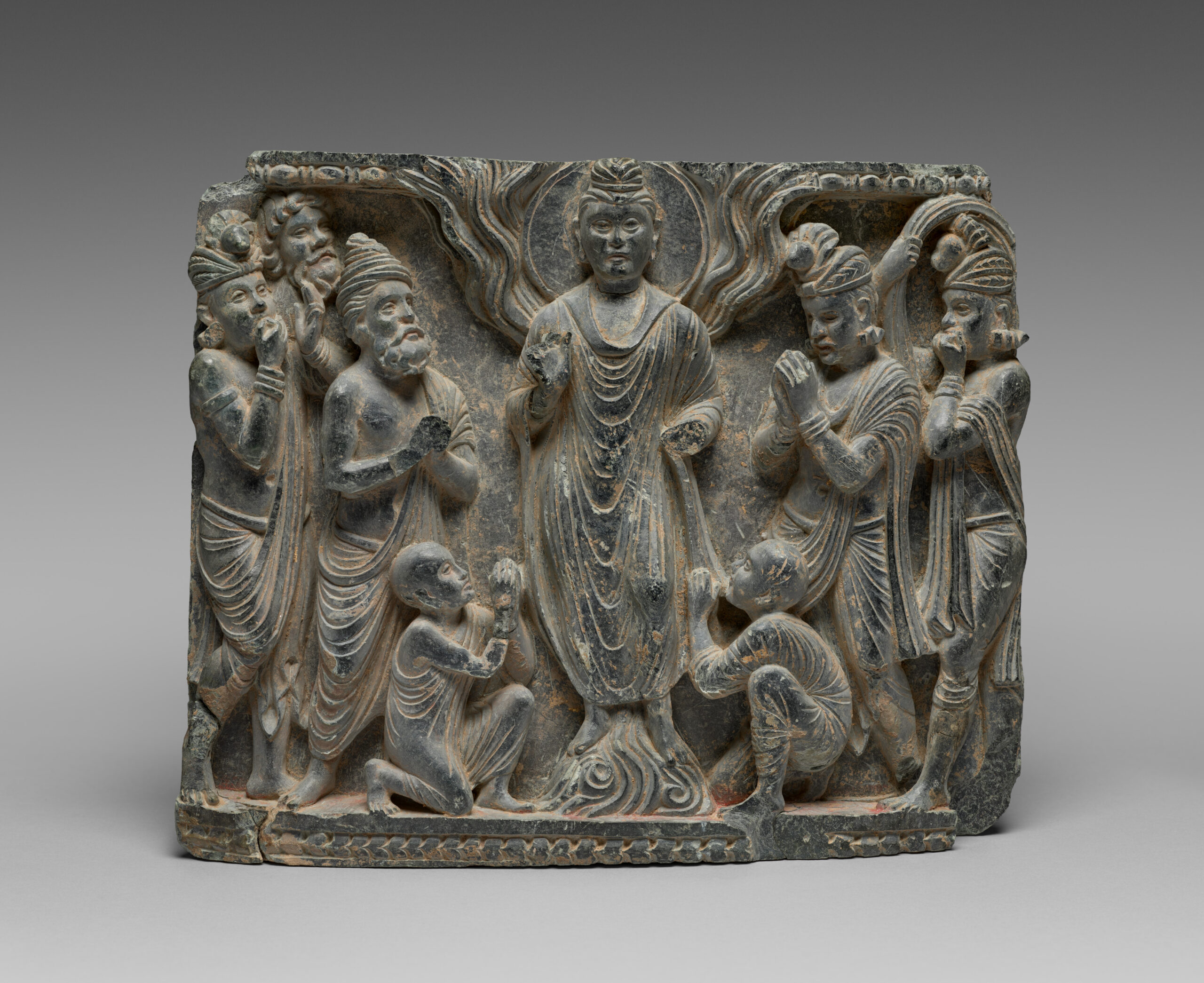
Archival Details
- Tradition: Gandhara
- Period: c. 100 CE
- Medium: schist with traces of gold
- Dimensions: Overall: 23.8 x 29.2 cm (9 3/8 x 11 1/2 in.)
- Credit line: Andrew R. and Martha Holden Jennings Fund
- Source: The Cleveland Museum of Art, accession 1975.102
Gandharan sculpture developed in the ancient region spanning present-day northern Pakistan and eastern Afghanistan, roughly 1st–5th century CE, and is known for blending Greco-Roman stylistic conventions with Buddhist subject matter. Grey schist is a common medium, and the tradition produced some of the earliest anthropomorphic images of the Buddha.